


🔥 65K+ SOLD! 🍑 Heirloom "Honey Red" Dwarf Peach Tree Live Seeds
🔥 65K+ SOLD! 🍑 Heirloom "Honey Red" Dwarf Peach Tree Live Seeds
Why gardeners choose it
BUNDLE & SAVE
Couldn't load pickup availability

🔥 65K+ SOLD! 🍑 Heirloom "Honey Red" Dwarf Peach Tree Live Seeds


Gardening · Backyard & Balcony
The Dwarf Peach Tree That Turns a Small Balcony Into a Summer Orchard
Pink blossoms in spring. Honey-sweet red-fleshed peaches in summer. No farm, no ladder, no heavy labor — one large pot is enough.

If you've bitten into a supermarket peach this year, you already know the story: rock-hard in the hand, mealy in the mouth, picked green so it could survive a week in a refrigerated truck and another two weeks in cold storage.
That's not how peaches are supposed to work. A peach ripens on the tree or not at all — which is why the red-fleshed "Honey Red" that grandparent gardens grew half a century ago tasted like a different fruit entirely.
This season, that heirloom variety is back — bred down into a natural dwarf that fruits in a container on a balcony, a patio, or the smallest backyard.

A Taste Most People Haven't Had in Decades
Standard yellow peaches are bred to survive shipping. Honey Red was never asked to do that — it was bred for the table. The flesh is a deep crimson, the juice is thick enough to run down your wrist, and the sugar content runs noticeably higher than the clingstone fruit sold by the pound in grocery aisles.
It's the flavor people remember from a grandparent's garden — and the reason growers keep this variety for themselves instead of sending it to market.

"If you've only ever eaten a supermarket peach, you've never actually tasted one."
Built for Balconies, Patios and Small Yards
The dwarf habit is the whole point. Where a standard peach needs an orchard and a ladder, Honey Red stays compact and fruits heavily in a container — and puts on a show long before harvest.

- Natural dwarf habitStays compact and container-friendly — no pruning ladder, no orchard space needed.
- Self-pollinatingOne tree sets fruit on its own. No second tree, no relying on bees.
- Spring blossom showWeeks of pink flowers before the fruit even starts — a neighborhood conversation piece.
- Hardy in Zones 4–9Bred to handle cold northern winters and hot southern summers across the U.S. and Canada.
- Plant once, harvest for yearsA perennial that grows with your family — not a weekly line item at the grocery store.
Store-Bought vs. Your Own Tree
| Supermarket Peaches | Your Honey Red | |
|---|---|---|
| Picked | Green, weeks before ripe | Ripe on the branch |
| Distance | 1,500+ cold-storage miles | Steps from your door |
| Cost | Paid every single week | Plant once, harvest for years |
| Flavor | Bred to survive shipping | Bred for the table |
| Spring | Nothing | Pink blossoms for weeks |
Growing It Is the Easy Part
No "green thumb" required. Every pack ships with a step-by-step guide, and the whole routine boils down to six simple habits:

- Soak
Soak the seeds in warm water for 24 hours to wake them up and improve germination.
- Plant
Sow ½ inch deep in rich, well-draining soil — pot or ground both work, as long as drainage is good.
- Hydrate
Keep soil moist but never soggy while the seedling establishes.
- Sunshine
Peach trees are sun-worshippers. Give them the sunniest spot you have.
- Feed & trim
Organic fertilizer every two months; trim young shoots to build a strong shape.
- Harvest
Watch the fruit turn from green to deep red — then eat them garden-to-table.

📋 Specifications
| Variety | Honey Red red-flesh peach, natural dwarf |
| Seed grade | Heirloom, non-GMO, hand-picked |
| Habit | Compact, container-friendly, self-pollinating |
| Climate | US & Canada hardiness zones 4–9 |
| Pollination | Self-fertile — one tree is enough |
| Package | 1 pack premium high-germination seeds + growing guide |
Spring planting season sells out early
Grab a pack (or share one with a gardening friend — it makes a genuinely unexpected gift).
Check Availability →90-day grow guarantee · Ships from U.S. warehouse
The Part No Supermarket Can Sell You
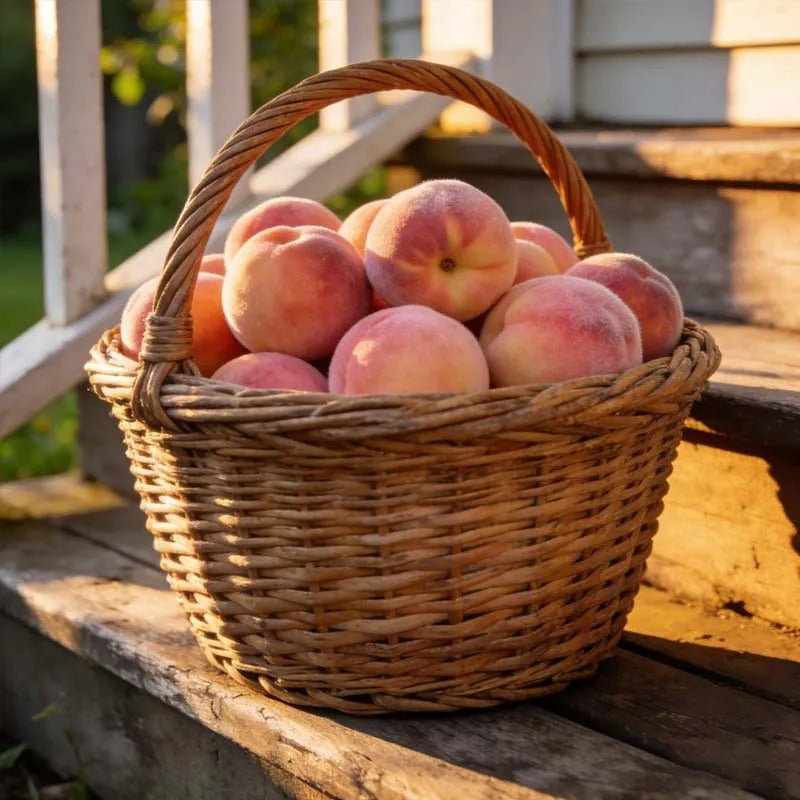
Ask anyone who grows their own fruit what the best part is, and it's never just the eating. It's the baskets on the porch steps in August. It's the kids stealing one off the low branches. It's handing your grandchild a peach you grew yourself and watching them realize food comes from somewhere.


What Growers Are Saying

"Real results, real fruit"
I was skeptical at first, but now my tree is producing beautiful peaches. Seeing actual fruit grow from these seeds is such a satisfying experience.
— Marcus R., OH · Verified buyer

"Finally harvested my own"
After patiently growing for a couple of seasons, I finally got my first peaches — incredibly sweet and juicy. Totally worth the wait.
— Ella D., TX · Verified buyer

"A fruitful tree"
Amazing to see the full journey from planting to harvesting real peaches. The tree is healthy and already giving me a nice amount of fruit.
— Darnell S., GA · Verified buyer
Plant this spring. Harvest for years.
Buy-more-save-more bundles are live — most growers grab two packs (one to gift).
Choose Your Bundle →Free shipping on multi-pack bundles
Before You Ask
Do I need two trees for fruit?
No. Honey Red is self-pollinating — a single tree sets a full crop on its own.
Will it survive winter in my area?
It's bred for USDA/Canada hardiness zones 4–9, which covers most of the continental U.S. and southern Canada — from cold northern winters to hot southern summers.
What size pot do I need?
Start with a 14–18 inch container with drainage holes and quality potting mix. Upgrade the pot as the tree grows.
How long until I get fruit?
Germination takes 2–4 weeks with warmth and moisture. Like most fruit trees, expect the first real harvests from season two onward — the tree keeps producing for years after.
What if mine don't sprout?
Every order is covered by our 90-day grow guarantee. If your seeds fail to germinate, contact support and we'll make it right.
Grow times vary by climate, pot size and care. Blossom and fruit photos show mature, established trees. [EDIT] Calverv is an independent garden retailer. Questions? support@Calverv